
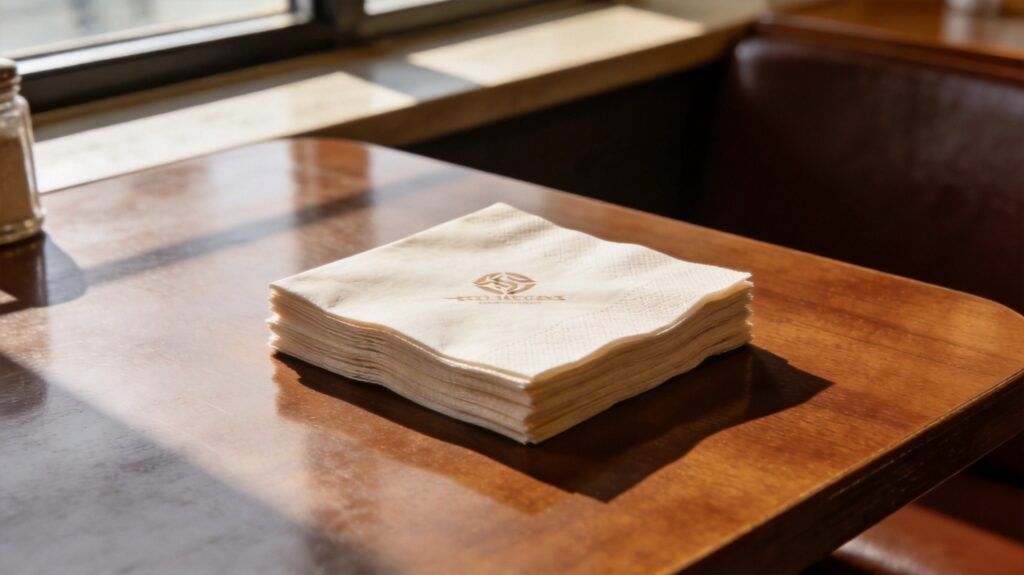
Custom Paper Napkins: Elevate Your Restaurant Brand | Buyer’s Guide
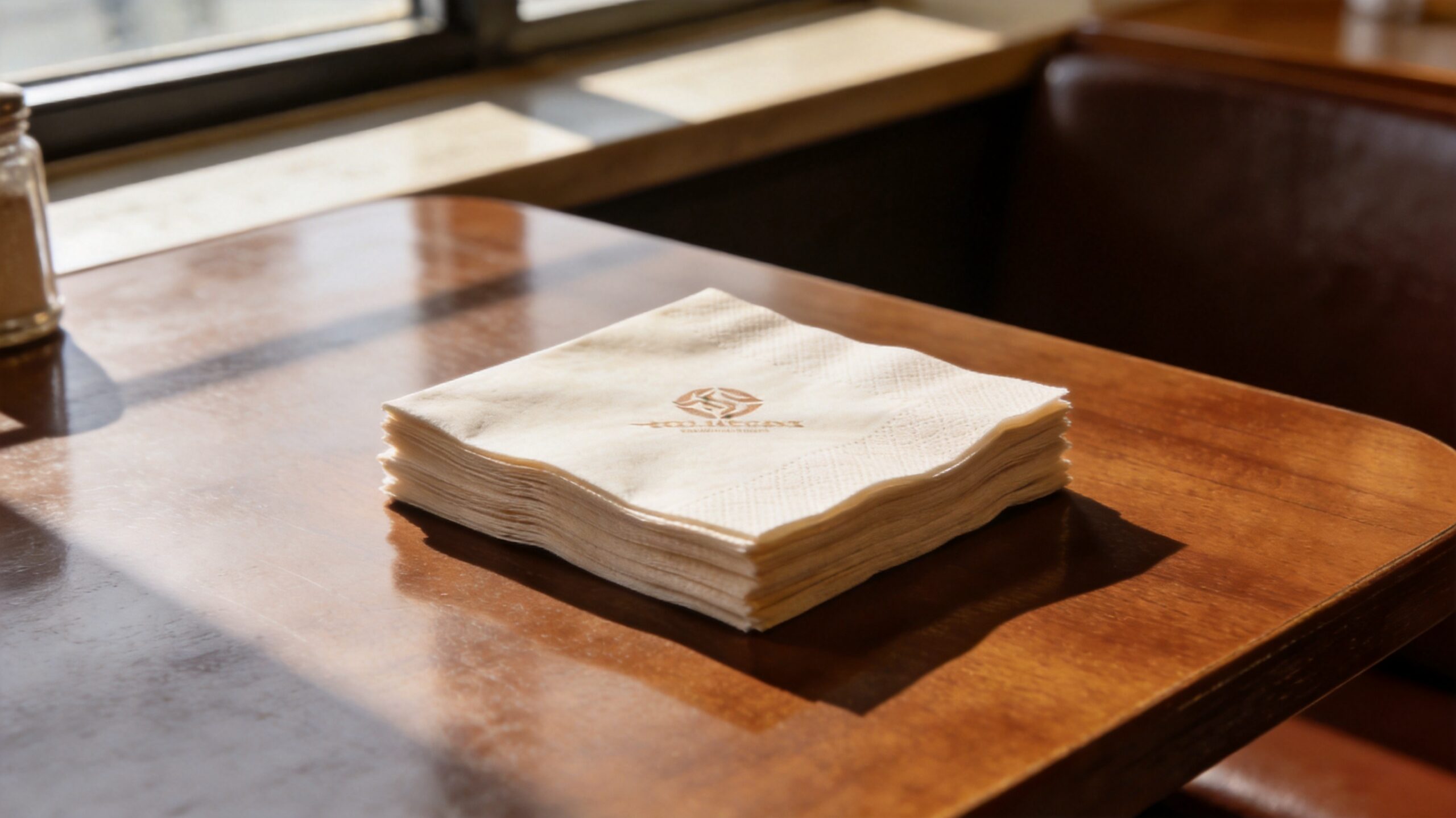
In the competitive restaurant industry, every touchpoint with a guest is an opportunity to reinforce your brand identity. While many operators focus on menu design, interior décor, and digital presence, one of the most overlooked yet powerful branding tools sits directly on the table: the napkin. Custom paper napkins transform a disposable utility item into a subtle, high-frequency brand ambassador.
For restaurant owners, purchasing managers, and multi-unit operators, understanding how to specify, source, and deploy branded napkins can deliver measurable returns in brand recall, perceived quality, and customer loyalty. This buyer’s guide provides a comprehensive roadmap for making an informed, commercially sound investment in custom paper napkins.
Why Custom Paper Napkins Matter for Restaurant Branding
The Psychology of Branded Tabletop Touchpoints
Dining is a multisensory experience, and the tabletop is the stage where your brand narrative unfolds. A custom paper napkin is one of the few items every single guest physically touches during their meal. This tactile interaction creates a subconscious association between your logo, your colors, and the positive emotions of a satisfying dining experience.
Psychologically, branded touchpoints signal professionalism and attention to detail, which elevates the guest’s perception of your food quality and service standards. When a guest unfolds a napkin bearing your mark, you are not just providing a utility; you are delivering a branded moment.
Cost-Effective Advertising with Every Meal Served
Unlike traditional advertising, which costs money regardless of engagement, custom paper napkins generate impressions with every cover served—at no additional media cost. Each napkin is a miniature billboard that guests see, touch, and often take with them.
In a busy restaurant serving 300 guests daily, that translates to over 100,000 branded impressions per year, all for a marginal cost per unit that is often less than a penny above generic alternatives. For catering and delivery, branded napkins travel off-premises, extending your advertising reach into homes, offices, and event venues where potential new customers encounter your brand for the first time.
Key Specifications to Specify When Ordering Custom Paper Napkins
Material Options: Ply, GSM, and Recycled Content
The material specification determines both the feel and the function of your napkin. Ply refers to the number of layers; 2-ply is standard for most dining, while 3-ply offers superior absorbency and a more premium hand-feel for upscale establishments.
GSM (grams per square meter) indicates paper density—a higher GSM (e.g., 40-50 GSM per ply) provides a sturdier, more cloth-like texture. For environmentally conscious brands, napkins made from 100% recycled fiber or those certified by the Forest Stewardship Council (FSC) are increasingly available without significant cost premiums.
Your choice here directly affects guest perception: a thin, flimsy napkin undermines brand quality, while a substantial, soft napkin reinforces it. For a wide selection of quality options, explore our custom paper napkins product range to find the right material for your establishment.
Size and Fold Styles for Different Service Formats
Napkin dimensions and folds should align with your service style. Standard luncheon napkins (16.5″ x 17″) suit casual dining and quick service. Dinner napkins (17″ x 19″) are appropriate for full-service and upscale restaurants where a larger lap coverage is expected.
For cocktail service or appetizer courses, smaller cocktail napkins (10″ x 10″ or 12″ x 12″) are ideal. Fold styles—quarter-fold, tri-fold, or dispenser-friendly flat packs—impact both presentation and operational efficiency. A tri-fold napkin stands upright elegantly in a glass, while a quarter-fold is easier for high-speed table setting in QSR environments.
Printing Techniques: Flexography vs. Digital vs. Offset
The printing method affects color accuracy, detail resolution, and cost efficiency at different order volumes. Flexography is the most economical for large runs (100,000+ units) and works well with bold, simple logos and limited color palettes.
Digital printing offers full-color, high-detail reproduction with no plate costs, making it ideal for smaller quantities (5,000-50,000 units) or complex artwork with gradients and photographs. Offset printing provides the highest quality for mid-to-large runs, delivering crisp edges and consistent color, but requires higher setup costs and longer lead times.
Discuss your volume and design complexity with suppliers to determine the most cost-effective technique for your specific needs.
Commercial Use Cases: Where Branded Napkins Deliver ROI
Casual Dining and Quick Service Restaurants
For QSR and casual dining, custom paper napkins serve as high-volume, low-cost branding tools. Dispenser napkins with a bold logo reinforce brand recognition during fast, frequent visits. They also contribute to a cleaner, more organized table presentation, which is critical for maintaining standards in high-throughput environments.
The ROI here is driven by volume: millions of impressions per location per year at negligible incremental cost.
Upscale Dining and Event Catering
In fine dining and catering, the napkin is a key element of tabletop aesthetics. A premium 3-ply napkin with a debossed or foil-stamped logo signals luxury and attention to detail. For catered events, branded napkins add a layer of professionalism and cohesion, reinforcing the host’s brand or the event’s theme.
The ROI is measured in perceived value—guests at upscale venues often judge the entire experience on these small details, directly impacting reviews, tips, and repeat bookings. Consider our gold-stamped lace wedding napkins for an elegant touch that elevates any upscale table setting.
Takeout, Delivery, and To-Go Packaging
With the explosive growth of off-premises dining, custom paper napkins in takeout bags are a strategic necessity. They extend your brand into the customer’s home, creating a consistent experience that bridges dine-in and delivery.
Including branded napkins in every to-go order is a low-cost tactic that enhances unboxing satisfaction and encourages social media sharing, turning a routine delivery into a branded moment.
Custom Paper Napkins vs. Generic Alternatives: A Buyer’s Comparison
Brand Recall and Customer Loyalty Impact
Generic white napkins are invisible to the guest’s conscious mind; they are purely functional. Custom paper napkins, however, create a memorable visual cue. Studies in consumer psychology show that repeated exposure to a brand logo, even in passive contexts, increases familiarity and preference.
A guest who sees your logo on a napkin, a cup, and a receipt is more likely to recall your restaurant when making future dining decisions. This cumulative brand recall directly supports customer retention and word-of-mouth referrals.
Perceived Quality vs. Cost per Unit
The cost differential between generic and custom napkins is often marginal—typically 10-20% higher per unit depending on print complexity and volume. However, the perceived quality uplift is substantial.
A guest who receives a sturdy, well-printed branded napkin perceives the entire restaurant as more professional and trustworthy. This perception justifies premium pricing on your menu and encourages higher tips for staff. When calculated against the lifetime value of a loyal customer, the incremental cost of branded napkins is negligible.
Environmental Certifications and Guest Expectations
Modern guests are increasingly scrutinizing the sustainability of restaurant supplies. Generic napkins may come from unknown sources, while custom napkins can be specified with certified recycled content, chlorine-free bleaching, and compostable materials.
Offering eco-certified custom paper napkins not only meets guest expectations but also provides a marketing talking point. Restaurants that visibly commit to sustainability—through branded messaging on the napkin itself—differentiate themselves in a crowded market and attract environmentally conscious demographics. For more on sustainable material options, consult this industry reference on napkin materials and certifications.
How to Source and Order Custom Paper Napkins for Your Restaurant
Choosing a Supplier: MOQs, Lead Times, and Samples
Selecting the right supplier is critical. Start by requesting physical samples to evaluate paper quality, print sharpness, and overall hand-feel. Inquire about minimum order quantities (MOQs)—these can range from 5,000 for digital printing to 50,000+ for flexography.
Verify lead times, which typically span 3-6 weeks from artwork approval to delivery, and account for this in your inventory planning. A reliable supplier should offer a dedicated account manager, digital proofs, and a clear production timeline. Learn more about our manufacturing capabilities on our company background page to understand what to expect from a trusted partner.
Budgeting and Pricing Tiers for Small vs. Large Chains
Pricing for custom paper napkins is heavily volume-dependent. A single-location restaurant might pay $0.03-$0.05 per napkin for a digital print run of 10,000 units. A regional chain ordering 500,000 units via flexography could reduce that to $0.01-$0.02 per unit.
For multi-unit operators, consolidating orders across locations into a single annual purchase unlocks significant savings. Consider establishing a national or regional contract with a supplier to lock in pricing and ensure consistent quality across all sites.
Compliance and Food-Safety Standards to Verify
Ensure your supplier complies with food-contact regulations, such as FDA approval for materials that will contact food. In the EU, look for compliance with Regulation (EC) No 1935/2004. Additionally, verify that inks and dyes are food-safe and non-migratory.
For napkins used in takeout, confirm that the packaging materials meet local health codes. Request certificates of compliance and safety data sheets as part of your procurement process to protect your brand from liability. For detailed compliance requirements, refer to this technical reference on food-contact material standards.
Implementation Tips for Launching Your Branded Napkin Program
Design Guidelines for High-Impact, Legible Logos
Napkin design requires restraint. The logo should be legible at a glance, with high contrast against the paper color. Avoid intricate details that may blur at small print sizes. Use your brand’s primary colors, but be mindful that large solid areas can be costly to print.
A common best practice is a single-color logo on a white or neutral background for maximum clarity, or a full-color design on a contrasting napkin for a bolder statement. Always request a physical proof before full production to verify color accuracy and print alignment.
Rollout Strategy Across Multiple Locations
For chains, a phased rollout minimizes risk. Start with a pilot in one or two high-traffic locations to gauge guest reaction and operational fit. Gather feedback from floor staff on napkin absorbency and size.
Once validated, roll out to all locations, ensuring that each site receives the correct SKU (dinner vs. luncheon vs. cocktail) based on its service format. Centralize ordering to maintain consistency and negotiate better pricing.
Measuring Brand Lift and Reorder Triggers
Track the success of your branded napkin program through both qualitative and quantitative metrics. Monitor social media mentions and tagged photos—guests frequently photograph branded napkins in food posts. Include a question in guest satisfaction surveys about tabletop presentation.
Operationally, set reorder triggers based on usage rates: for example, reorder when inventory falls below a 4-week supply. Review your napkin program annually, and consider seasonal or promotional designs to keep the brand fresh without sacrificing consistency.
Frequently Asked Questions About Custom Paper Napkins
What Is the Minimum Order Quantity for Custom Napkins?
MOQs vary significantly by printing method. Digital printing typically allows MOQs as low as 5,000 napkins, making it accessible for small restaurants and pop-ups. Flexographic printing, which requires engraved plates, usually demands a minimum of 50,000 to 100,000 units to be cost-effective.
Offset printing falls in between, often starting at 20,000 units. Always ask your supplier for their specific MOQ and whether they offer tiered pricing that rewards higher volumes.
Can I Get Eco-Friendly Custom Paper Napkins?
Yes. Many suppliers now offer custom paper napkins made from 100% recycled post-consumer waste, bamboo fiber, or bagasse (sugarcane pulp). These options can be printed with soy-based or water-based inks that are compostable.
Look for certifications such as FSC, Green Seal, or the USDA BioPreferred label. While eco-friendly options may carry a slight cost premium, they align with consumer expectations and can be marketed as a differentiator for your brand.
How Far in Advance Should I Place an Order?
For standard custom napkins, plan for a lead time of 4-6 weeks from final artwork approval to delivery. This includes production time, quality control, and shipping. For large-volume orders or those requiring specialty materials (e.g., 3-ply, custom shapes), allow 8-10 weeks.
During peak seasons (holidays, summer), lead times may extend further. To avoid stockouts, maintain a minimum of 6-8 weeks of inventory on hand and place reorders before your stock dips below that threshold.
Custom paper napkins are a small investment with outsized returns in brand perception, customer loyalty, and cost-effective advertising. By carefully specifying materials, print methods, and design, and by sourcing from a compliant, reliable supplier, you can turn a disposable necessity into a durable brand asset.
Whether you operate a single café or a national chain, implementing a branded napkin program is a practical, measurable step toward elevating your restaurant’s identity in the minds of every guest.